Before you start
- Start
- Hôtel de Sens, 1 rue du Figuier
- Getting there
- Saint-Paul or Sully–Morland metro, then walk to Rue du Figuier.
- Terrain
- Urban streets, paving stones and some narrow pavements. This route has not undergone an accessibility audit.
Allow roughly 30 minutes of walking and another 30 for the five stops. Times and distances are editorial estimates, excluding indoor visits. Stay on public streets. If the passage through Hôtel de Sully is closed, reach Place des Vosges via Rue de Birague.
The five places on your walk
Architecture
Hôtel de Sens
What stands before you
At the corner of Rue du Figuier, the turrets and pointed roofs of Hôtel de Sens break the rhythm of the façades. Stand back to take in its outline: this first stop can be read entirely from the street.
Its story
Tristan de Salazar commissioned this residence in the late fifteenth century for the archbishops of Sens. Its name refers to a city and a religious office, rather than a travellers’ hotel. Listed as a historic monument in 1862, it has housed the Forney library since 1961. That new use connects the building’s heritage with the decorative arts, graphic design and crafts documented by the library.
Look at this
Follow the roofline first, then the turrets. Compare their vertical lines with the façade’s windows. Finally, choose one junction between stone and roof: shifting scale changes how you see the whole building, without going inside.
What most people never learn
The library also preserves wallpaper, fabric samples and advertising posters. Everyday objects become evidence for the history of design and craftsmanship.
Monument
Église Saint-Paul–Saint-Louis
What stands before you
On Rue Saint-Antoine, the façade of Saint-Paul–Saint-Louis rises like a stone stage set. Its arrangement in tiers is easiest to see from the opposite pavement, where you can stop safely.
Its story
The Jesuits built the church between 1627 and 1641. Its Baroque vocabulary marks a change from the Gothic forms at the start of the walk: the façade guides the eye upwards. Compare the shapes rather than trying to name every feature. Hôtel de Sens created a silhouette with turrets; here, tiers and columns organise a monumental front.
Look at this
Find the columns, openings and divisions between the tiers. Move your eyes from the entrance to the top, then look for repeated elements. The walk stays outdoors; an interior visit is a separate extension.
What most people never learn
Louis XIII helped finance the construction. Behind this religious façade lies a royal contribution to the church’s creation.
For more detail and visitor information
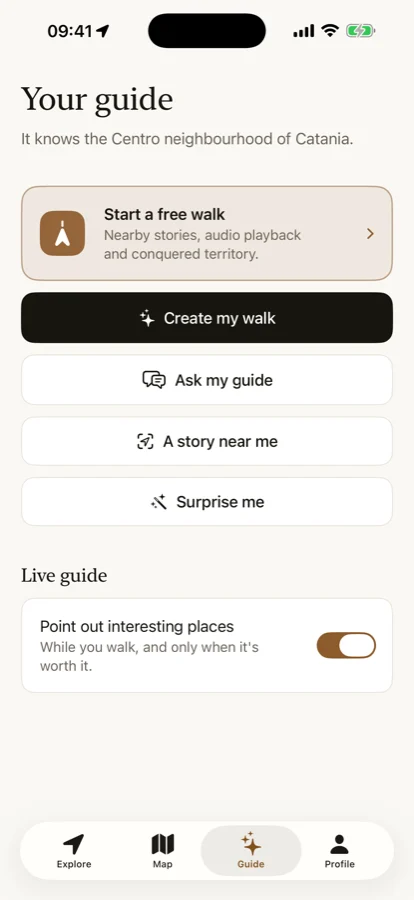
Paris je t’aime ↗Paroisse Saint-Paul–Saint-Louis — histoire et patrimoine ↗Your next guide fits in your pocket.
Download Street Whisperer. 7 free visits and 7 questions, in 15 languages.
Architecture
Hôtel de Sully
What stands before you
Hôtel de Sully offers a pause along Rue Saint-Antoine: a courtyard, then a garden and an orangery. If the passage is open, take a moment to understand that sequence before continuing to Place des Vosges.
Its story
Construction began in 1624 for Mesme Gallet, a financial official. Le Marais was then a fashionable district, and a private mansion brought a residence, courtyard and garden together within the city. In the nineteenth century, the building accommodated shops, craftspeople and tenants. The state acquired it in 1944 and undertook a lengthy restoration. A monument’s life can span very different uses.
Look at this
From the accessible courtyard, compare the sculpted decoration with the openings. Then see how the garden changes the depth of the composition. If the passage is closed, reach Place des Vosges via Rue de Birague.
What most people never learn
The Duke of Sully was not the original commissioner: he bought the mansion in 1634. The surviving name belongs to a later owner.
For more detail and visitor information
Centre des monuments nationaux ↗Architecture
Place des Vosges
What stands before you
Place des Vosges surrounds Square Louis-XIII. Brick, stone and arcades establish a shared rhythm across its façades. View the whole from one corner, then from the opposite side: the square is also an urban composition.
Its story
Henri IV launched the Place Royale project in 1605. Completed in 1612 under Louis XIII, it brought thirty-six pavilions together around a regular space. Several houses were given a coordinated appearance: that coherence remains striking today. The square illustrates city-making at the scale of an ensemble rather than an individual building.
Look at this
Compare the arcades, roofs and bands of stone within the brick façades. Look for elements repeated from one pavilion to the next. Beneath the arcades, you experience the same composition at walking height.
What most people never learn
Place Royale became Place des Vosges in 1799, honouring the department that had paid its taxes. Its present name carries a piece of fiscal history.
For more detail and visitor information
Ville de Paris ↗Museum
Musée Carnavalet
What stands before you
Musée Carnavalet occupies two private mansions in Le Marais. Before entering, look at the building itself: Paris’s history museum has an architectural history of its own. This outdoor walk ends here.
Its story
The City of Paris bought Hôtel Carnavalet in 1866, following a proposal by Prefect Haussmann, to create a history museum. It opened in 1880, after major works had transformed the capital. Hôtel Le Peletier de Saint-Fargeau joined the museum in 1989. Its collections extend the walk by placing streets and buildings within a wider story.
Look at this
Compare the façade with Hôtel de Sens and Hôtel de Sully. If the courtyards are accessible, notice the transition from street to interior space. Allow extra time for the collections: they are not included in this hour-long walk.
What most people never learn
Madame de Sévigné and her family lived in Hôtel Carnavalet from 1677 to 1696. Before telling Paris’s story, the mansion housed one of its great letter writers.
For more detail and visitor information
Musée Carnavalet — histoire du musée ↗Musée Carnavalet — présentation des bâtiments ↗
A thread to follow as you walk
Choose a detail before reading each stop’s story. Turn the route into an exercise in noticing: a roof, a column, an arcade, then the way each place opens onto the street. You can follow the whole walk without entering the buildings.
About this walk
An editorial suggestion prepared for Street Whisperer using the sources linked at each stop. Times, distances and coordinates are indicative. The route has not been validated by a field walk. Check access on site and directly with venues.
The app finds nearby places and creates walks around your preferences; it does not automatically load this editorial itinerary. Its stories are AI-generated and may contain errors.
Street Whisperer collection · Updated 2 October 2026