Before you start
- Start
- Place Saint-Jean, outside the cathedral
- Getting there
- Metro D to Vieux Lyon–Cathédrale Saint-Jean, then walk to Place Saint-Jean.
- Terrain
- Paving stones, narrow passages and thresholds. The route stays in the lower quarter without climbing Fourvière; full accessibility is not guaranteed.
Allow 25–35 minutes of walking, plus time to pause and look. Courtyards and traboules pass through lived-in buildings: enter only when access is permitted and never force a door. The route also works from the street. Museum visits add to the stated time.
The five places on your walk
Monument
Cathédrale Saint-Jean
What stands before you
Place Saint-Jean gives you room to look at the cathedral. After the neighbourhood’s narrow streets, this open space lets you take in its façade at once. Start with the entrances, then let your eyes rise.
Its story
Building continued from 1180 to 1480: three centuries separate its beginning and completion. That long span explains why a medieval monument cannot be reduced to a single period. The cathedral hosted two councils in the thirteenth century, then endured destruction during the Wars of Religion and the Revolution. Restoration is as much a part of its story as construction.
Look at this
Find the large circular opening in the façade, then the portals. Compare those openings with the stone around them. Stay on the square for this walk; seeing the stained glass and furnishings inside requires a separate visit.
What most people never learn
Inside is an astronomical clock, described by the tourist office as one of Europe’s oldest. It offers a reason to return for an interior visit.
For more detail and visitor information
ONLYLYON — primatiale Saint-Jean ↗ONLYLYON — chronologie de la cathédrale ↗Architecture
Maison des Avocats
What stands before you
On Rue de la Bombarde, Maison des Avocats borders the Basoche garden. If access is open, the courtyard reveals galleries and ochre columns. Otherwise, look from the street: a closed door need not interrupt the walk.
Its story
The lawyers’ professional body acquired this Renaissance ensemble in 1979, restored it and used it as a training centre until 2002. Its name preserves a relatively recent use on a site long associated with legal life. The neighbourhood’s history lies not only in the shapes of its houses, but also in the professions and institutions that occupied them.
Look at this
From a permitted viewing point, count the three gallery levels and compare the repeated columns with the openings. Notice how a courtyard serves several storeys. Keep your voice low: Old Lyon is a lived-in neighbourhood.
What most people never learn
The Basoche was an association of clerks and future legal professionals. It settled some disputes and also staged plays: the square’s name evokes theatre as well as law.
For more detail and visitor information
ONLYLYON — place de la Basoche ↗Your next guide fits in your pocket.
Download Street Whisperer. 7 free visits and 7 questions, in 15 languages.
Architecture
Maison du Chamarier
What stands before you
At 37 Rue Saint-Jean, Maison du Chamarier is a stop between the cathedral and Renaissance houses. The façade offers a first impression; when accessible, the courtyard brings the decoration closer. Never force a closed entrance.
Its story
The oldest parts date from the thirteenth century. Between 1496 and 1516, François d’Estaing transformed the residence, once within Saint-Jean’s cathedral enclosure. Its decoration reflects the transition from Flamboyant Gothic to the Renaissance. The owner wanted more than accommodation: the house’s richness also expressed his social standing. This stop gives local authority a tangible form.
Look at this
If the courtyard is open, compare the sculpted stair tower with the gallery. Notice differences in the lines rather than trying to label every detail. From the street, spend a moment looking at the façade.
What most people never learn
The chamarier held the keys to six fortified gates and collected taxes during fairs. The house’s name recalls responsibility for security and trade.
For more detail and visitor information
ONLYLYON Tourisme ↗Museum
Gadagne
What stands before you
Gadagne brings Lyon’s history museum and the puppetry museum together in a Renaissance ensemble. Stop at the entrance on Rue de Gadagne. This walk introduces the building; allow extra time for its collections.
Its story
The monument grew through several building phases starting in the late Middle Ages. The Guadagni, Florentine Renaissance bankers, gave it its name. In the early twentieth century, Lyon gradually acquired the buildings for its history museum. Excavation and restructuring between 1998 and 2009 brought the site’s past back into focus. The building itself becomes something to explore.
Look at this
If the courtyard is accessible, compare the levels, windows and routes between the buildings. Try following one line from one volume to another. Looking at their arrangement prepares you for an interior visit without replacing it.
What most people never learn
In the nineteenth century, nearly sixty families lived in apartments within the ensemble. Before becoming a museum, the monument was also a place of everyday life.
For more detail and visitor information
Gadagne — le monument et son histoire ↗Gadagne — les transformations du site ↗History
Temple du Change
What stands before you
On Place du Change, a regular façade closes the walk after the houses and courtyards of Rue Saint-Jean. Look at it as a whole: its composition offers a different relationship between architecture and public space.
Its story
The Loge du Change was built between 1748 and 1750 by Jean-Baptiste Roche, using Soufflot’s plans and elevations. It served Lyon’s merchants until the Revolution. Later abandoned, it was assigned to Protestants in 1803. A place of trade became a place of worship. The name Temple du Change preserves both chapters of its life.
Look at this
Compare the arrangement of openings and horizontal lines with the façades seen earlier. Stand far enough back to see the whole, then return to one detail. You do not need an interior visit to finish the route.
What most people never learn
The organ inside dates from 1858. It is another trace of the building’s life after its conversion into a Protestant church, to discover on a separate visit.
For more detail and visitor information
ONLYLYON Tourisme ↗
A thread to follow as you walk
Compare three ways of organising space: the large square at Saint-Jean, a building’s courtyard, and the ordered façade of the Change. The thread is the transition between public and lived-in space. Be quiet in courtyards and give residents priority.
About this walk
An editorial suggestion prepared for Street Whisperer using the sources linked at each stop. Times, distances and coordinates are indicative. The route has not been validated by a field walk. Check access on site and directly with venues.
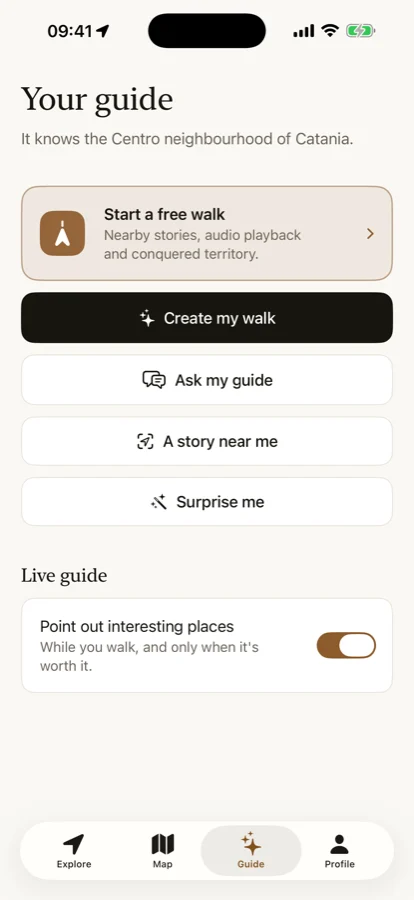
The app finds nearby places and creates walks around your preferences; it does not automatically load this editorial itinerary. Its stories are AI-generated and may contain errors.
Street Whisperer collection · Updated 2 October 2026